The best pajeon restaurants in Seoul are concentrated in five neighborhoods: Gwangjang Market, Insadong, Hoegi, Seochon, and Mangwon — each with its own vibe and the perfect makgeolli pairing. If you've ever been caught in Seoul rain without a plan, you've probably ended up at a convenience store. This guide fixes that. I spent two rainy seasons eating through 30 spots to build this shortlist — so you don't have to.
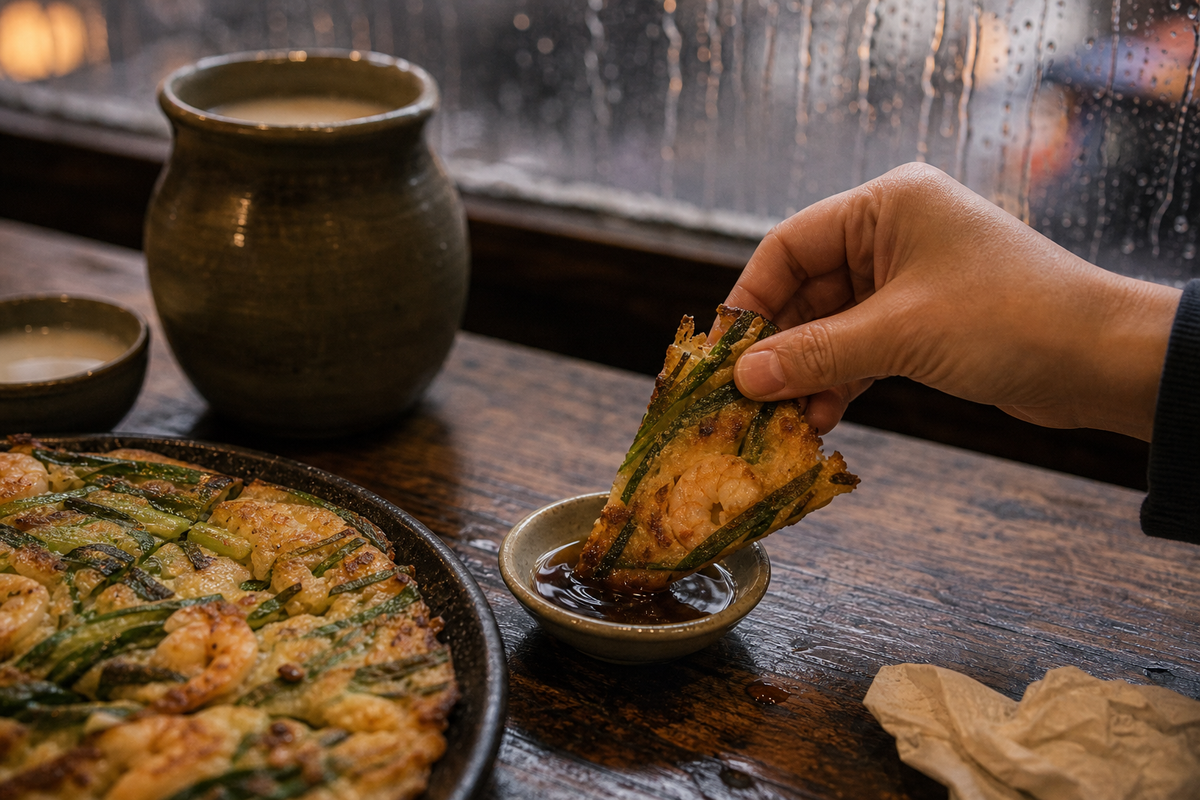
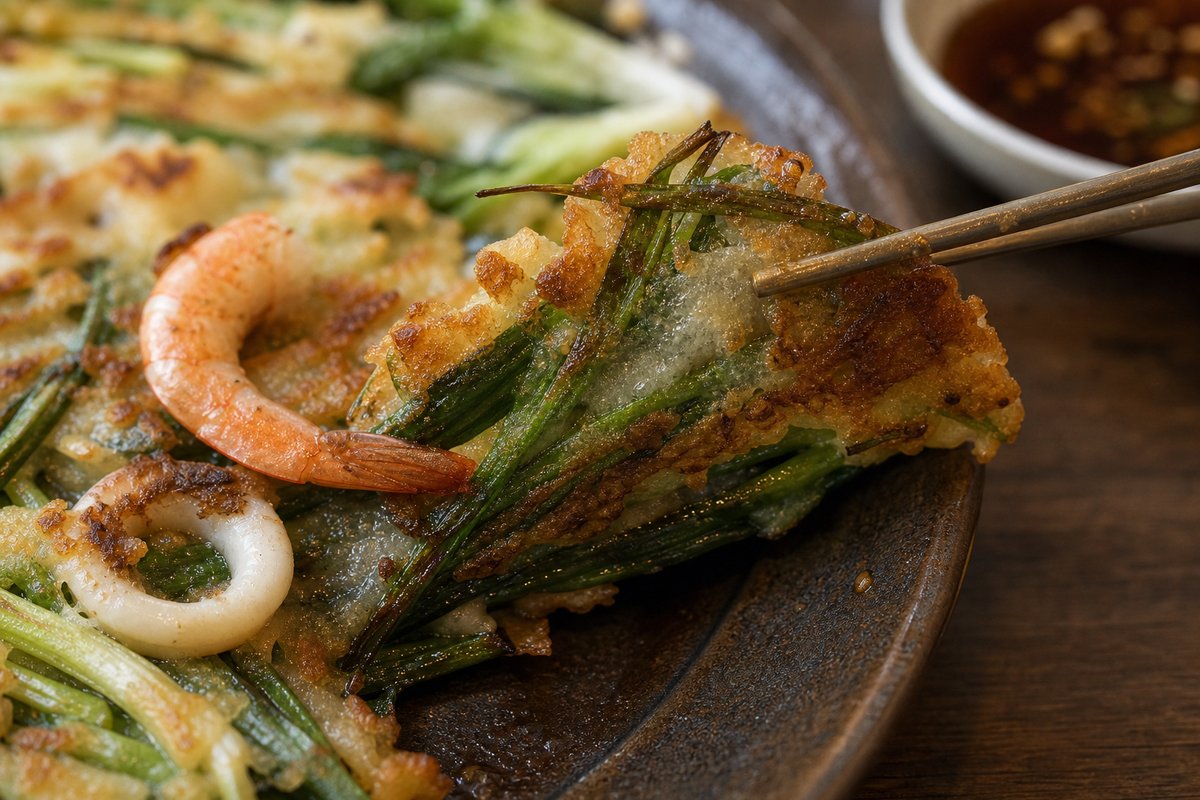
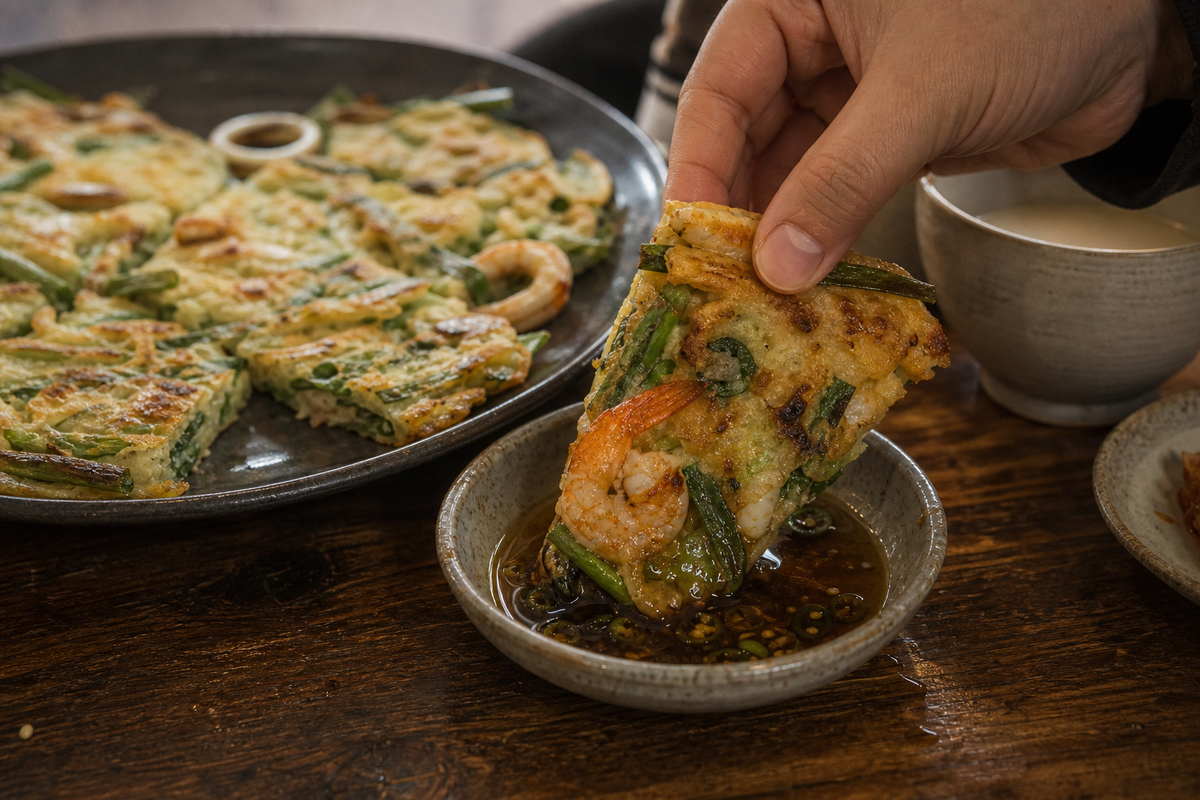
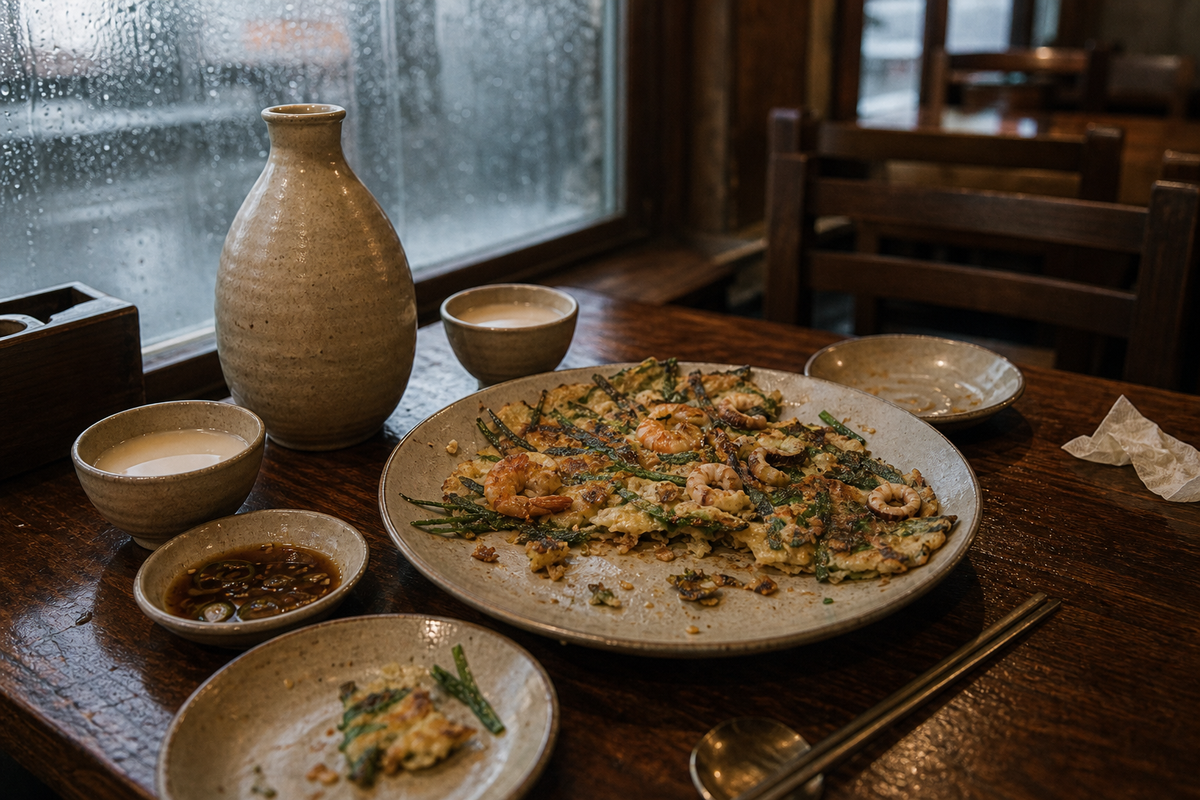
🌧️ Why Koreans Always Eat Pajeon When It Rains
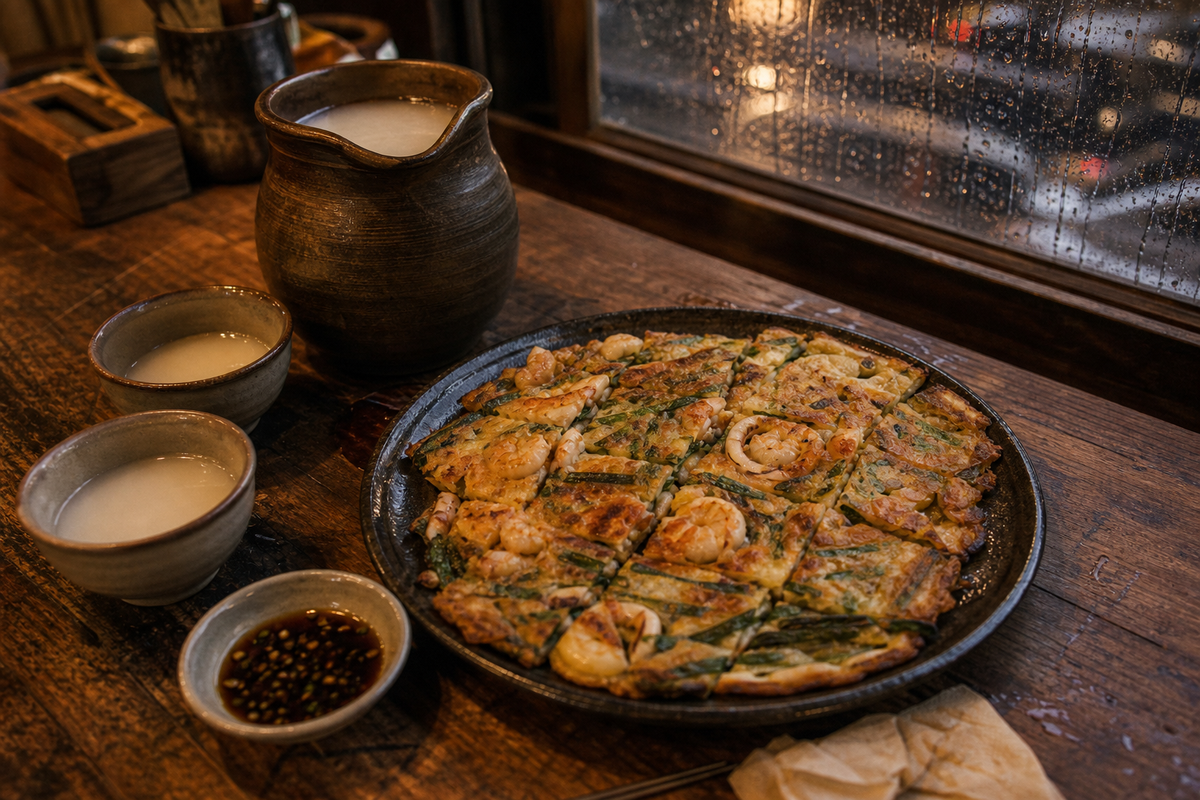
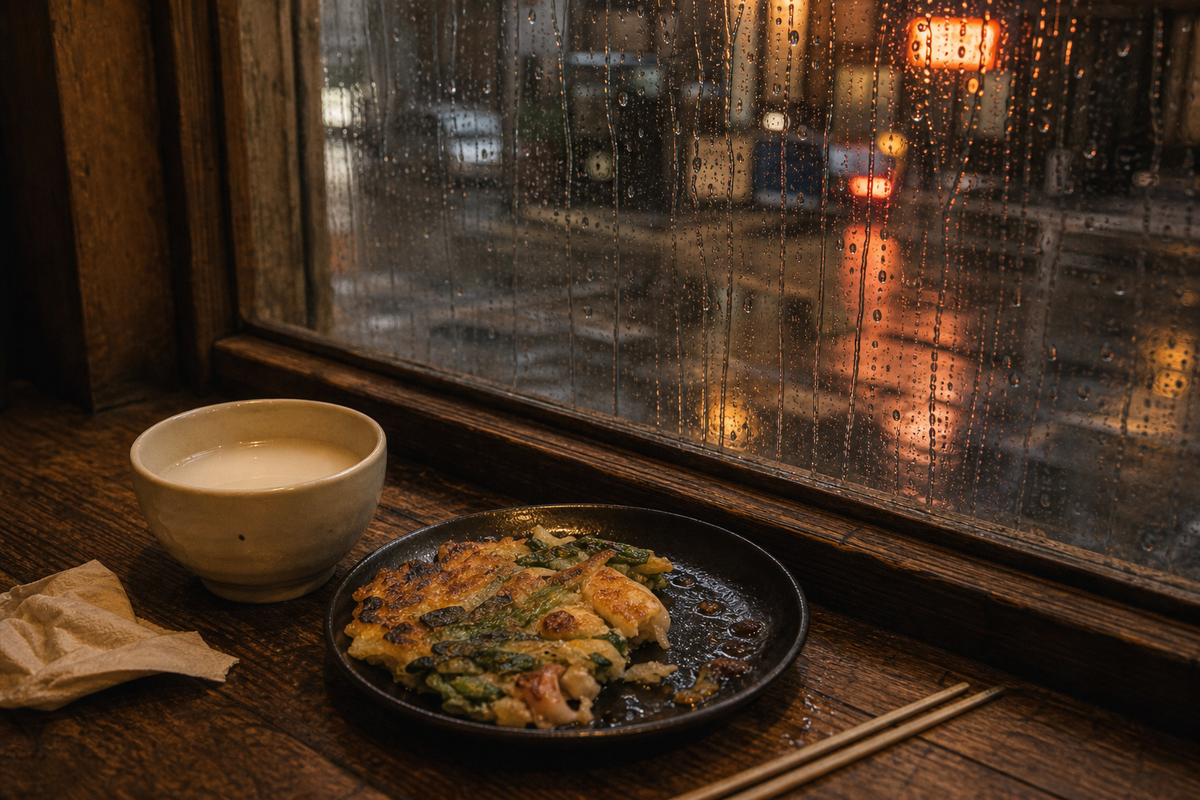
Ask any Korean why they crave pajeon on rainy days and you'll get a laugh followed by "that's just how it is." But there's actual science behind it: the sizzle of batter hitting a hot oiled pan produces a sound frequency close to the 1/f fluctuation of rainfall — which neurologically triggers appetite. So that craving is hardwired, not cultural mythology.
Naver search data shows "haemul pajeon Seoul" queries spike 30–40% during monsoon season every year. The #rainydaypajeon Instagram tag generates thousands of posts each June. What's shifted recently is that younger Koreans and tourists alike are skipping the chains and hunting down the old-school spots — the kind that have been frying the same batter for 30+ years.
🍺 Pajeon + Makgeolli 101 (What to Order and How)
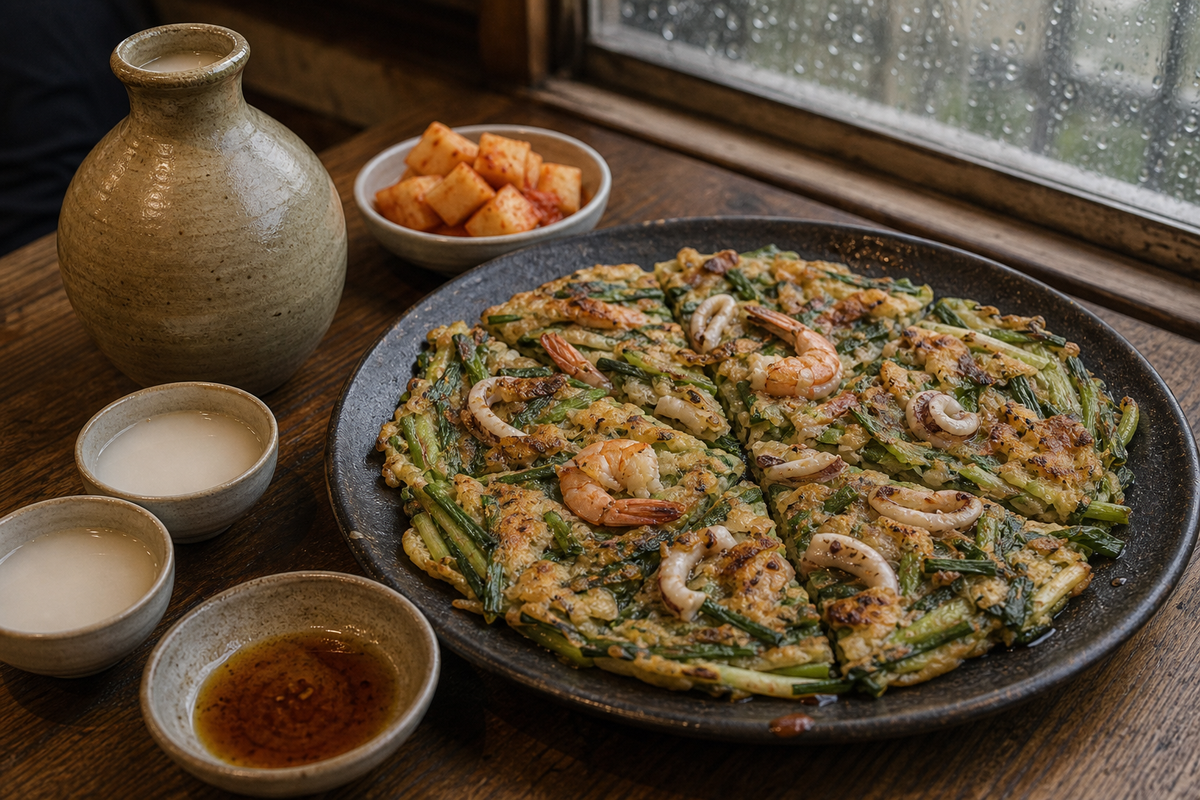
Makgeolli is Korea's oldest alcohol — unfiltered rice wine with a milky appearance, light carbonation, and 5–8% ABV. Think cloudy sake meets lightly fizzy yogurt drink. It costs 5,000–10,000 KRW per bottle and pairs with savory seafood pancakes the way beer pairs with pizza.
How to pour it right: Never fill the glass all at once — the carbonation dies. Gently swirl the bottle, pour halfway, let it settle, then top up. That's how locals do it.
📍 Seoul Pajeon Restaurants TOP 5 — By Subway Line
- ① Sunhuine Bindaetteok (순희네 빈대떡) | Gwangjang Market
🚇 Line 1 & 5 · Jongno 5-ga Station, Exit 8 · 3 min walk
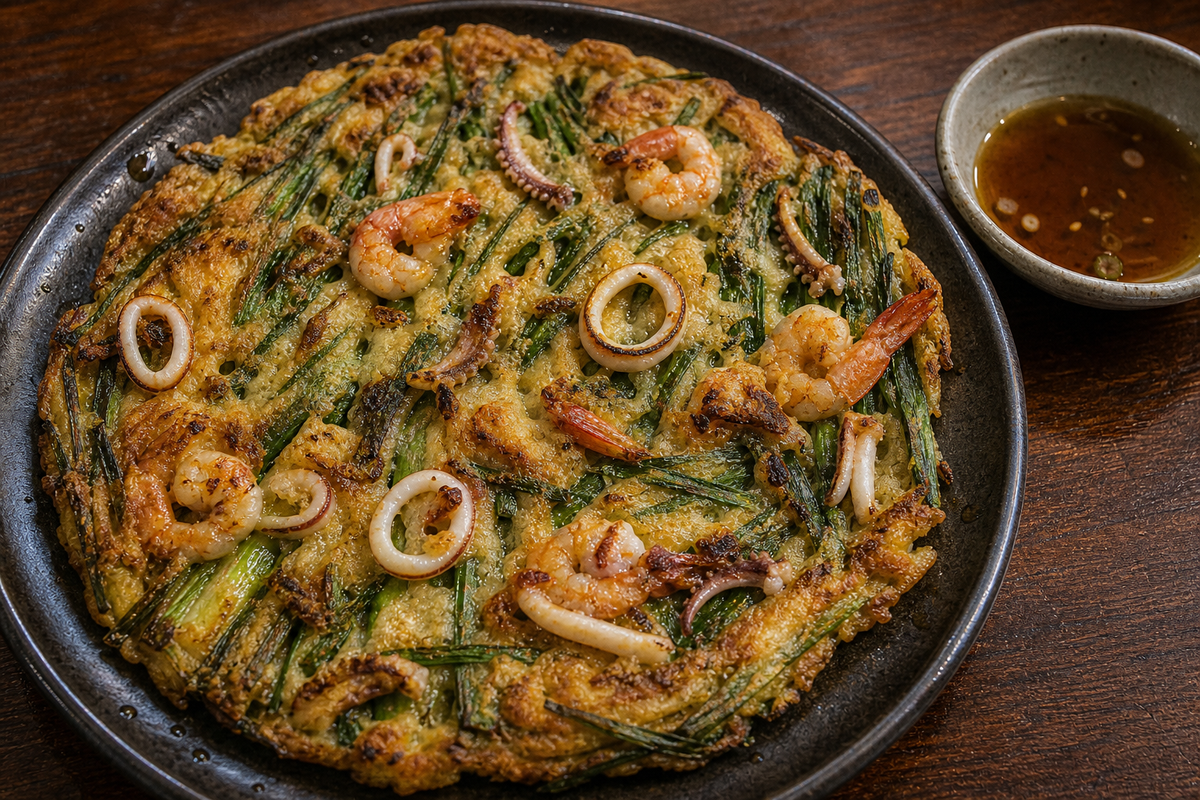
The most famous stall in Gwangjang Market's inner alley — 30+ years old and still grinding mung beans by millstone every morning. The haemul pajeon (seafood pancake) runs around 12,000 KRW; the bindaetteok (mung bean pancake) is 8,000 KRW. Both are legitimately excellent.
⏰ 09:00–23:00 daily
💡 Come before 3 PM on weekdays to keep the wait under 30 minutes. Rainy Saturday evenings: budget a full hour. Seating is elbow-to-elbow, so use a compact umbrella — not a full-length one. - ② Nuruknamu (누룩나무) | Insadong
🚇 Line 3 · Anguk Station, Exit 6 · 5 min walk
The best makgeolli selection in this list — six rotating varieties with staff who'll match the bottle to your food. The haemul buchujeon (seafood and chive pancake) is the signature at 14,000 KRW. English-friendly atmosphere; staff used to foreign visitors.
⏰ 16:00–02:00 (next day)
💡 Bar counter seating makes this the top choice for solo travelers. Single glasses available at 3,500 KRW. Good for a late-night stop after Insadong galleries or Bukchon hanok alleys. - ③ Imone Wangpajeon (이모네 왕파전) | Hoegi
🚇 Line 1 / Gyeongwon Line · Hoegi Station, Exit 1 · 2 min walk
A local institution since the 1970s in the alley beside Kyung Hee University. Haemul pajeon is 10,000 KRW — the best value on this list. The pajeon "alley" here has multiple similar spots, so if there's a queue you can easily pivot next door.
⏰ 15:00–24:00
💡 Student neighborhood with a casual, no-frills energy. Far from touristy, which is the point. Off-the-radar for most guidebooks. - ④ Darae Guksu (다래국수) | Seochon (West Village)
🚇 Line 3 · Gyeongbokgung Station, Exit 2 · 5 min walk
Tiny 12-seat diner popular with Seochon regulars who treat rainy days as automatic meetup calls. Haemul pajeon at 11,000 KRW pairs perfectly with their janchi guksu noodles at 7,000 KRW. Ideal if you're already walking around Gyeongbokgung Palace or Tongin Market.
⏰ 11:00–21:00 (closed Mondays)
💡 Only 12 seats — expect a wait any rainy afternoon. The Gyeongbokgung Palace → Tongin Market → Darae Guksu route makes a solid half-day itinerary. - ⑤ Uirak Mangwon (우이락 망원본점) | Mangwon
🚇 Line 6 · Mangwon Station, Exit 1 · 5 min walk
The most photogenic of the five — modern interior without feeling like a tourist trap. Batter is made fresh per order. Haemul pajeon is 15,000 KRW; the modum-jeon assorted platter runs 22,000 KRW and feeds two to three people. Walk Mangwon Market first, then eat here.
⏰ 11:00–22:00 (break 15:00–17:00)
💡 Best pick for dates or groups. The Mangwon neighborhood itself has great coffee shops and vintage stores nearby for a full afternoon.
⚠️ Practical Tips Before You Go
Compact umbrella only. Gwangjang Market and Hoegi alley spots have seats spaced about 50cm apart. A full-size umbrella will drip on your neighbor — compact fold-up is the local move.
No reservations at 4 of 5 spots. Sunhuine (Gwangjang), Imone (Hoegi), Darae (Seochon), and Uirak (Mangwon) are all walk-in only. Rain forecast + weekend evening = 45–60 minute wait at the popular ones. Having a backup in the same neighborhood saves the meal.
Cash still matters. Gwangjang Market and Hoegi alley spots prefer cash. Uirak and Nuruknamu take cards and KakaoPay. Carry at least 20,000–30,000 KRW in small bills to be safe.
Ordering for one is fine. Pajeon is sized for sharing but solo diners are common, especially at Nuruknamu's counter seats. No pressure to over-order.
❓ FAQ — Seoul Pajeon for Visitors
Q. Is Gwangjang Market pajeon worth the hype?
A. Yes, specifically Sunhuine Bindaetteok — but skip the tourist-facing stalls at the market entrance. Walk to the inner alley where the real spots are. The freshly ground mung bean batter at Sunhuine is genuinely different from what you'll find anywhere else.
Q. What's the difference between pajeon and bindaetteok?
A. Pajeon (파전) uses wheat flour batter with green onion as the base; bindaetteok (빈대떡) uses mung bean batter and is denser and nuttier. Both are Korean pancakes but they have noticeably different textures. Gwangjang Market's Sunhuine does both — try one of each.
Q. Can I find these spots if I don't read Korean?
A. Yes. Nuruknamu (Insadong) has an English-friendly atmosphere, and Uirak (Mangwon) is used to international visitors. For Gwangjang Market, just follow the sound of frying and look for the longest queues. Google Maps works for all five locations.
Q. Is pajeon gluten-free?
A. Standard pajeon batter contains wheat flour and is not gluten-free. Bindaetteok (mung bean pancake) at Sunhuine is naturally gluten-free. Always confirm with the restaurant, as soy sauce in dipping sauce also contains gluten.
Bottom line: when it rains in Seoul, don't waste it. Pick the spot closest to where you already are — Gwangjang for central Seoul, Anguk/Insadong for palace area tourists, Gyeongbokgung station for Seochon walkers, Mangwon for a chill afternoon. The food and the atmosphere genuinely earn the cliché. Warm pajeon, cold makgeolli, rain on the roof — it's the real Seoul experience that most tourists miss. 🍶


