If you've been following K-culture lately, you might have caught the episode of Sung Si-kyung's YouTube series Mannaltende (만날텐데) where Anderson .Paak and Jay Park sat down for a proper Korean home-cooked meal. Two dishes stole the show: dak-jeon (닭전 — crispy pan-fried chicken) and dak-galbi (닭갈비 — spicy stir-fried chicken). Both are staples of Korean home cooking — deeply satisfying, easy to make, and the kind of food Koreans actually eat every week. Here's how to make both at home, plus where to eat the real thing in Korea.
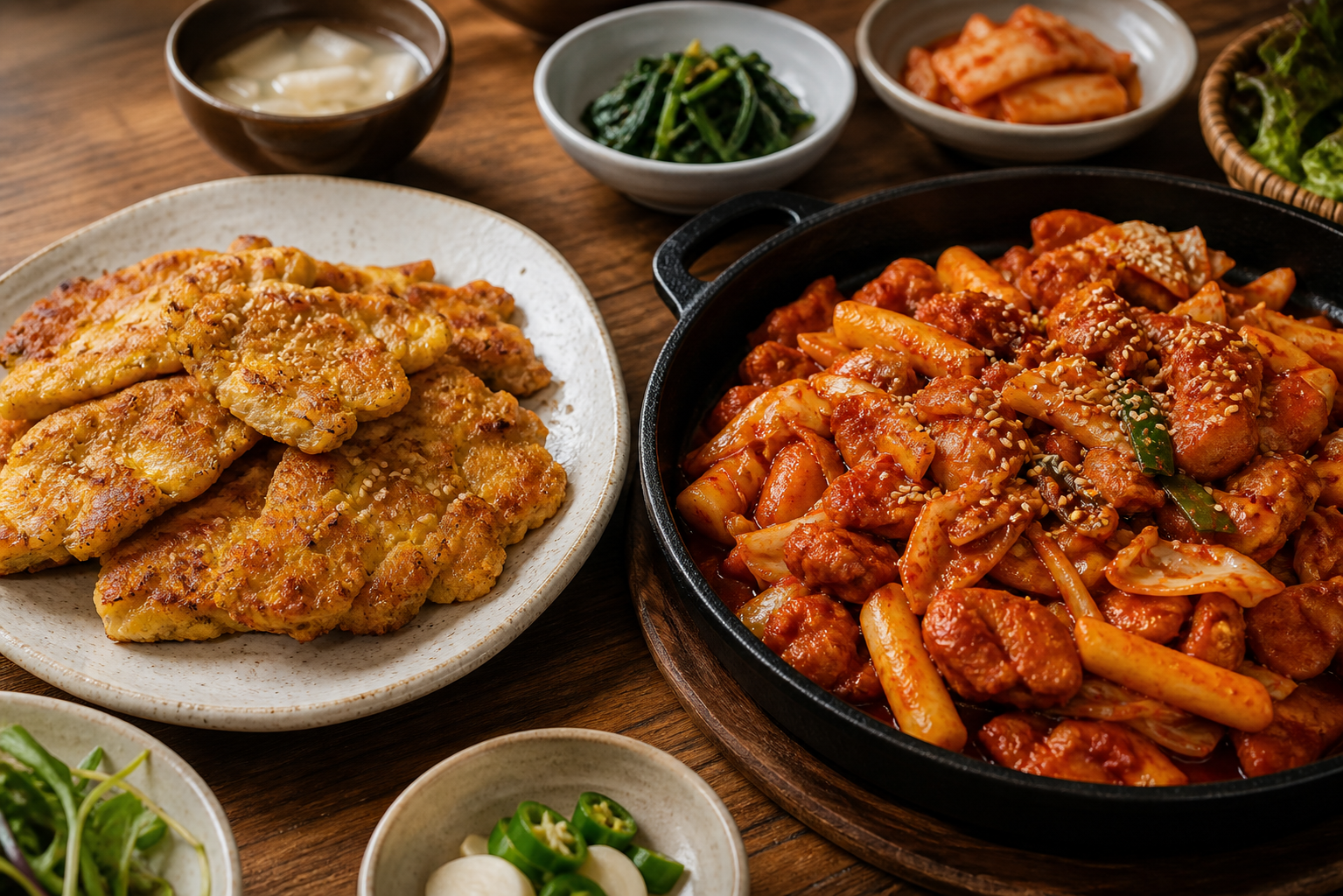
🍗 What Is Dak-Jeon? (닭전)
Dak-jeon is a Korean pan-fried chicken dish — thinner and crispier than fried chicken, without any batter. Marinated chicken slices are coated in egg and a light dusting of flour, then shallow-fried until golden. Think of it as the Korean answer to a chicken cutlet, but lighter and more savory. It's a classic banchan (side dish) and a favourite in home kitchens across Korea.
| Detail | Info |
|---|---|
| Cook time | 20 minutes |
| Difficulty | Easy |
| Servings | 2–3 |
| Key flavour | Savoury, umami, lightly crispy |
Ingredients — Dak-Jeon
- 300g (10oz) chicken breast, thinly sliced (about 0.5cm thick)
- 2 tablespoons soy sauce
- 1 tablespoon rice wine (or dry sherry)
- 1 teaspoon minced garlic
- ½ teaspoon ground black pepper
- ½ teaspoon sesame oil
- 2 eggs, beaten
- 4 tablespoons plain flour
- Neutral oil for pan-frying (vegetable or canola)
How to Make Dak-Jeon
- Marinate: Mix soy sauce, rice wine, garlic, pepper, and sesame oil. Toss the chicken slices in the marinade and let sit for 10 minutes.
- Coat: Lightly dust each piece in flour, shake off the excess, then dip into the beaten egg.
- Pan-fry: Heat a generous splash of oil in a non-stick pan over medium heat. Fry the chicken pieces for 3–4 minutes per side until golden and cooked through.
- Rest & serve: Drain on paper towels for 1 minute. Serve immediately with the dipping sauce below.
Dipping sauce: Mix 2 tbsp soy sauce + 1 tbsp rice vinegar + 1 tsp sugar + a pinch of chilli flakes. Simple, sharp, and perfect.


🌶️ What Is Dak-Galbi? (닭갈비)
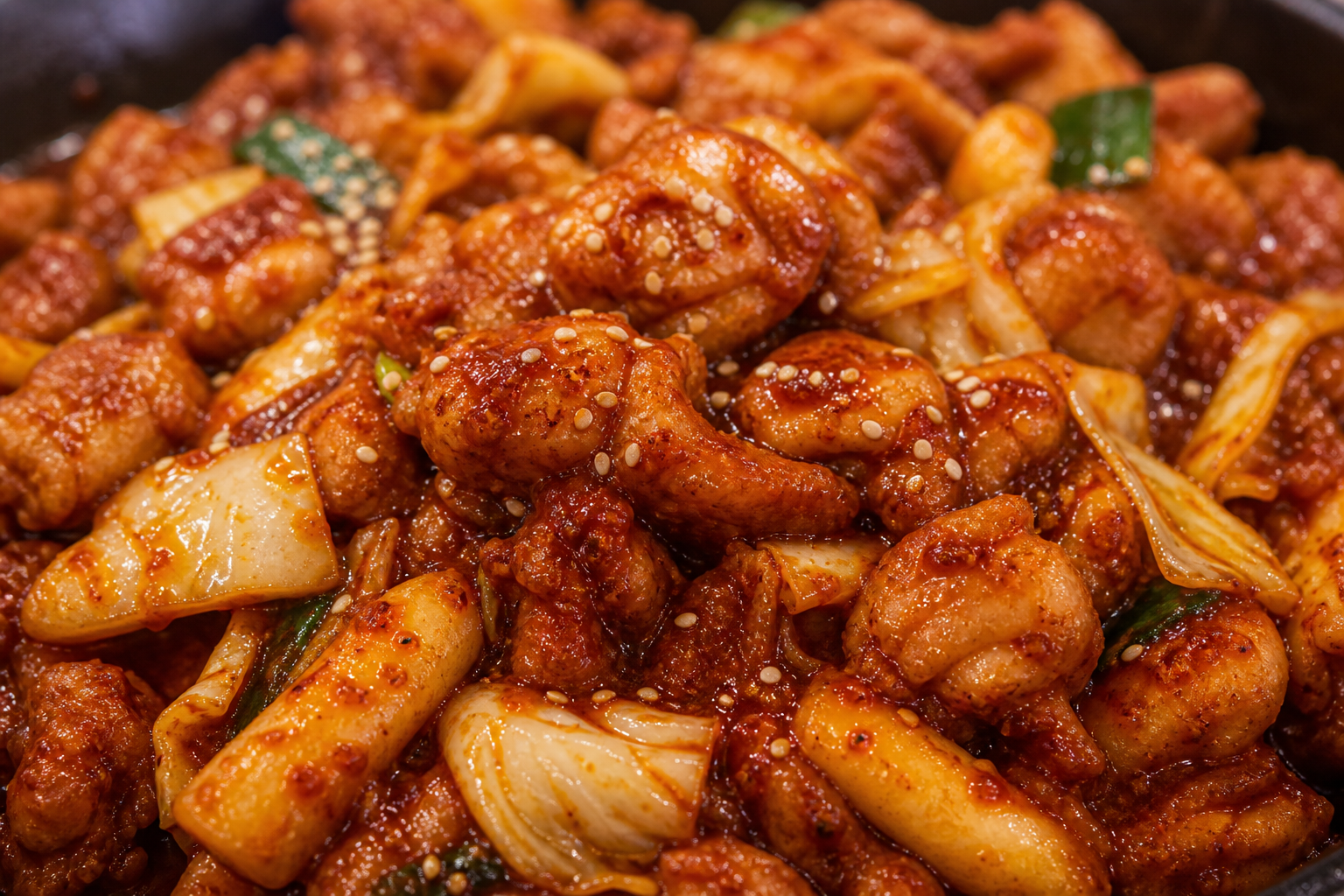
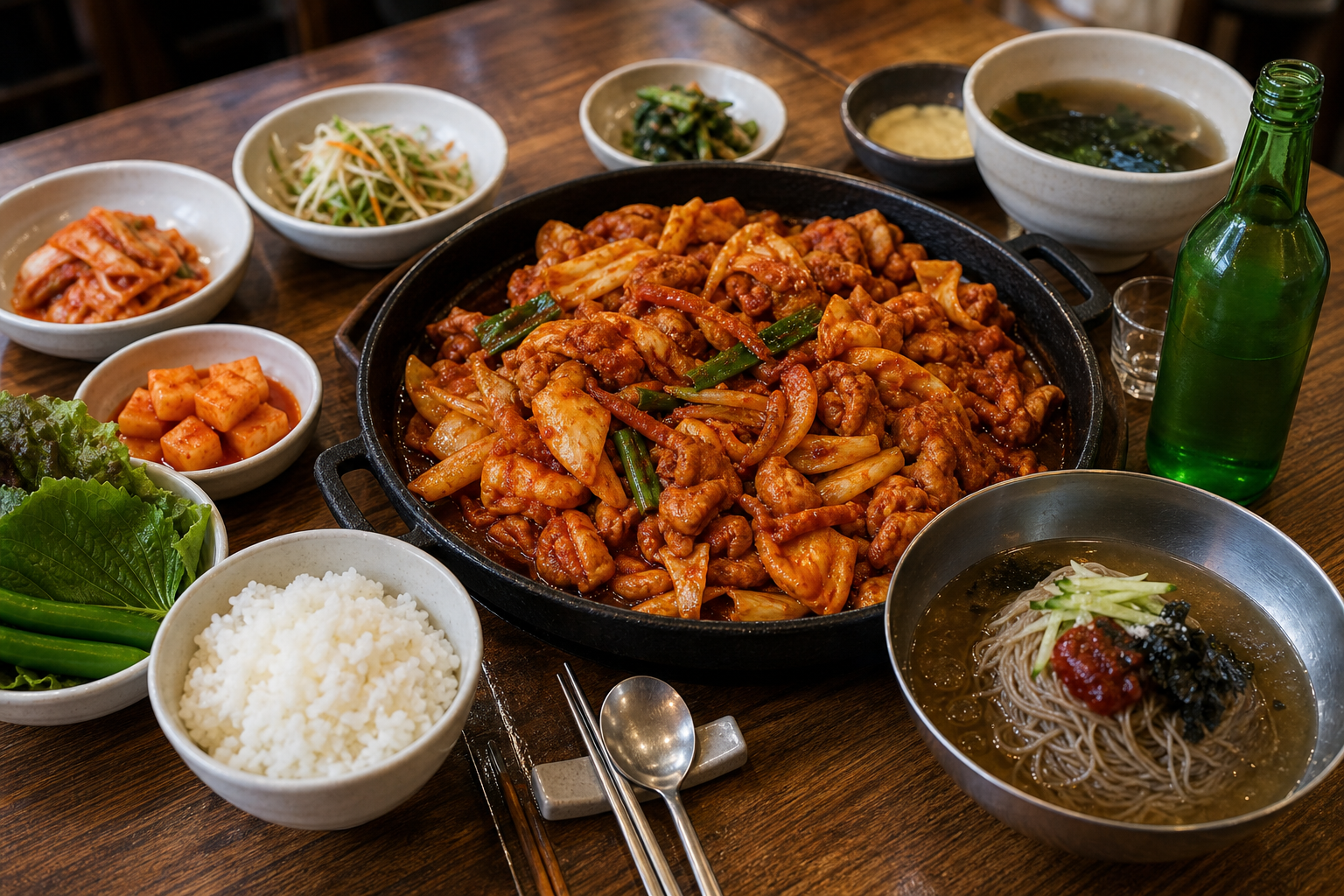
Dak-galbi is one of Korea's most beloved comfort foods — and one of the most misunderstood. Originating from Chuncheon (춘천) in Gangwon Province, it's a bold, saucy stir-fry of marinated chicken thighs cooked with cabbage, sweet potato, and rice cakes in a gochujang-based sauce. It's spicy, sweet, smoky, and completely addictive. Koreans eat it on a hot plate at the table, often finishing with fried rice scraped from the bottom of the pan — and there's always melted cheese involved.
Jay Park grew up eating this kind of food — it's as Korean as it gets. When he tasted it on Mannaltende, his reaction said everything.
| Detail | Info |
|---|---|
| Cook time | 30 minutes |
| Difficulty | Easy–Medium |
| Servings | 2–3 |
| Key flavour | Spicy, sweet, smoky, bold |
Ingredients — Dak-Galbi
Chicken marinade:
- 500g (1.1lb) boneless chicken thighs, cut into bite-size pieces
- 3 tablespoons gochujang (Korean red chilli paste)
- 1 tablespoon gochugaru (Korean chilli flakes) — adjust to heat preference
- 2 tablespoons soy sauce
- 1 tablespoon sugar
- 1 tablespoon sesame oil
- 1 tablespoon rice wine
- 3 cloves garlic, minced
- 1 teaspoon grated ginger
Vegetables & extras:
- ¼ head of cabbage, roughly chopped
- ½ medium sweet potato, thinly sliced
- 2 spring onions, cut into 5cm pieces
- 100g tteok (Korean rice cakes) — optional but highly recommended
- Mozzarella cheese to finish — optional, but melted cheese over dak-galbi is a whole experience
How to Make Dak-Galbi
- Marinate the chicken: Combine all marinade ingredients and mix well with the chicken. Marinate for at least 15 minutes (overnight in the fridge is better).
- Cook sweet potato first: Heat a wide pan or cast-iron skillet over medium-high heat with a little oil. Add sweet potato slices and cook for 3–4 minutes until slightly softened.
- Add chicken: Add the marinated chicken and cook for 5 minutes, stirring occasionally.
- Add remaining vegetables: Add cabbage, spring onions, and rice cakes. Stir everything together and cook for another 5–7 minutes until the chicken is cooked through and the sauce caramelises slightly.
- Optional cheese finish: Lower the heat, scatter mozzarella over the top, put a lid on for 1–2 minutes until melted. This is how it's served at Korean restaurants — don't skip it.

🔥 Two Styles of Dak-Galbi You Should Know
Dak-galbi is extremely popular across Korea, but if you travel to Chuncheon — the birthplace of the dish — you'll notice two distinct cooking styles. Knowing the difference will make your restaurant experience much richer.
| Style | Korean | Method | Texture & Flavour |
|---|---|---|---|
| Iron Plate | 철판 닭갈비 | Cooked on a large round cast-iron griddle built into the table | Saucy, caramelised, chewy rice cakes. The sauce reduces and chars slightly at the edges — sticky and rich. Most common style; perfect for the cheese-melt finish. |
| Charcoal | 숯불 닭갈비 | Grilled directly over charcoal | Smokier, slightly charred, more like Korean BBQ. Less saucy than iron plate. The marinade caramelises directly on the flame — intense and slightly dry-charred around the edges. A different experience entirely. |
Tip: First-timers should start with 철판 닭갈비 (iron plate). Once you love the dish, try 숯불 to compare — it's like discovering a whole new side of the same food.
🇰🇷 Chuncheon: The Home of Dak-Galbi
Dak-galbi was born in Chuncheon (춘천), the capital of Gangwon Province, about 80km east of Seoul — roughly 1 hour by ITX train from Cheongnyangni Station. The dish originated there in the 1960s when affordable chicken replaced expensive pork in spicy stir-fries. Today, Chuncheon has an entire "Dak-Galbi Street" (닭갈비 거리) in the Geunhwa-dong district, lined with dozens of restaurants that have been serving the dish for generations.
If you're visiting Korea and have a day to spare, the Chuncheon trip is worth it — take the train, eat dak-galbi and makguksu (cold buckwheat noodles) for lunch, and be back in Seoul by evening. Koreans do this trip on weekends all the time.
📍 Where to Eat Dak-Galbi in Korea
In Seoul (서울)
| # | Restaurant | Area | Why Go | Map |
|---|---|---|---|---|
| 1 | 춘천집 닭갈비 | 신촌 (Sinchon) | One of Seoul's most iconic dak-galbi spots, open since the 1980s. University crowd, authentic recipe, generous portions. The original Seoul gateway to Chuncheon-style cooking. | 지도 |
| 2 | 강촌 닭갈비 | 홍대 (Hongdae) | Popular with the international crowd in Hongdae. Approachable staff, English menu available, great iron-plate dak-galbi with all the fixings. Good spot to try if you're already in the Hongdae area. | 지도 |
| 3 | 명동 닭갈비 본점 | 명동 (Myeongdong) | Right in the heart of the tourist district — ideal if you're already doing Myeongdong. Busy, lively, and reliably good. Tourist-friendly with picture menus. Not the most local experience but very convenient. | 지도 |
In Chuncheon (춘천) — The Real Deal
| # | Restaurant | Area | Why Go | Map |
|---|---|---|---|---|
| 1 | 진미 닭갈비 | 강원대 앞 (Near Kangwon National University) | A Chuncheon institution. This unassuming restaurant near Kangwon National University has been feeding students and locals for decades. The recipe is deeply traditional — no frills, just perfectly caramelised dak-galbi at honest prices. Beloved by Chuncheon locals and those who know. | 지도 |
| 2 | 낭만 닭갈비 | 닭갈비 거리 (Dak-galbi Street, Geunhwa-dong) | Located on Chuncheon's famous Dak-Galbi Street — the most authentic setting you can find. The street has been the city's culinary identity for over 50 years. 낭만 닭갈비 is a well-known name on the street; order the iron-plate version with extra rice cakes and finish with the crispy fried rice. | 지도 |
| 3 | 우미 닭갈비 | 춘천 중앙로 (Chuncheon Downtown) | A long-standing Chuncheon favourite, known for its house-made gochujang marinade and the 숯불 (charcoal) option. If you want to try charcoal-grilled dak-galbi as a contrast to the iron-plate style, this is the place to do it. | 지도 |
💡 Chuncheon day-trip tip: Take the ITX-Cheongchun from Cheongnyangni Station → Chuncheon Station (about 1 hr, ₩8,400 one way). Walk or take a taxi to Dak-Galbi Street (5–10 min). Pair your meal with makguksu (막국수 — cold buckwheat noodles) — the two dishes are Chuncheon's iconic duo.
🇰🇷 Why These Dishes Matter in K-Culture
When Anderson .Paak and Jay Park sat down with Sung Si-kyung on Mannaltende, they weren't eating at a fancy Korean restaurant — they were eating home-style Korean food that Korean families actually cook. That's the point. Dak-jeon is the kind of thing a Korean mom makes with whatever's in the fridge. Dak-galbi is what you eat on a Friday night with soju and friends.
K-culture — K-pop, K-drama, Korean cinema — has introduced the world to Korean aesthetics. But Korean food is where it gets personal. These dishes aren't just food; they're the flavours behind the culture. When Jay Park says he misses Korean food, this is what he means.
Gochujang, sesame oil, and doenjang aren't exotic anymore — they're on shelves at Whole Foods, Costco, and most Asian grocery stores globally. If you can find them, you can cook this at home tonight.
🛒 Where to Find Korean Ingredients
| Ingredient | Where to Find | Substitute |
|---|---|---|
| Gochujang | Asian grocery, Whole Foods, Amazon | Sriracha + miso (not perfect, but works) |
| Gochugaru | Korean/Asian grocery store | Mild chilli flakes (reduce quantity) |
| Rice wine | Asian grocery (mirin or cheongju) | Dry sherry or sake |
| Tteok (rice cakes) | Korean grocery, frozen section | Skip or use thick udon noodles |
| Sesame oil | Any supermarket | No real substitute — just get it |

❓ FAQ
Q. Can I make dak-galbi less spicy?
Yes. Cut the gochujang to 1.5 tablespoons and skip the gochugaru entirely. You'll lose some depth but keep the flavour profile. Adding a tablespoon of ketchup alongside the gochujang also tones down heat while adding sweetness — a common Korean home hack.
Q. What's the difference between dak-jeon and Korean fried chicken?
Korean fried chicken (yangnyeom chicken) is double-fried in a thick batter. Dak-jeon is pan-fried with just egg and a light flour coat — it's lighter, less greasy, and cooks in half the time. Think of dak-jeon as the weeknight version.
Q. Do I need a special pan for dak-galbi?
Traditionally it's cooked on a round cast-iron griddle at the table. At home, any wide heavy pan works — cast iron is ideal, but a stainless steel or non-stick pan does the job. The key is high enough heat to caramelise the sauce without steaming the chicken.
Q. Is Chuncheon worth the day trip just for dak-galbi?
Absolutely. Beyond the food, Chuncheon is a beautiful lakeside city. Pair dak-galbi with a walk along Uiamho Lake, visit Nami Island (남이섬) which is just 15 minutes away, and the whole day makes perfect sense. Most Koreans in Seoul do this trip once a year.

